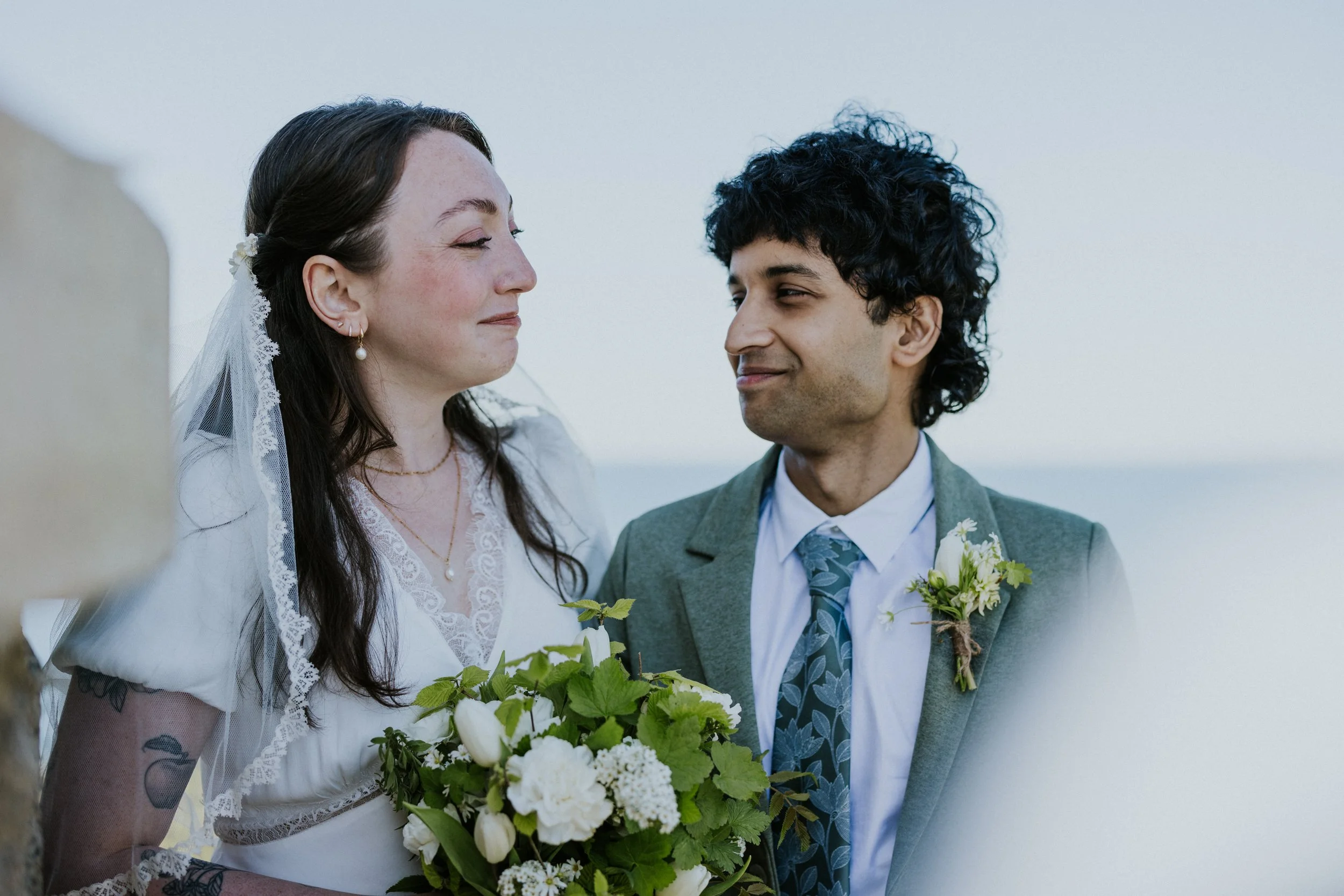
The Groom's Buttonhole: Mastering the Art of the Wedding Boutonniere
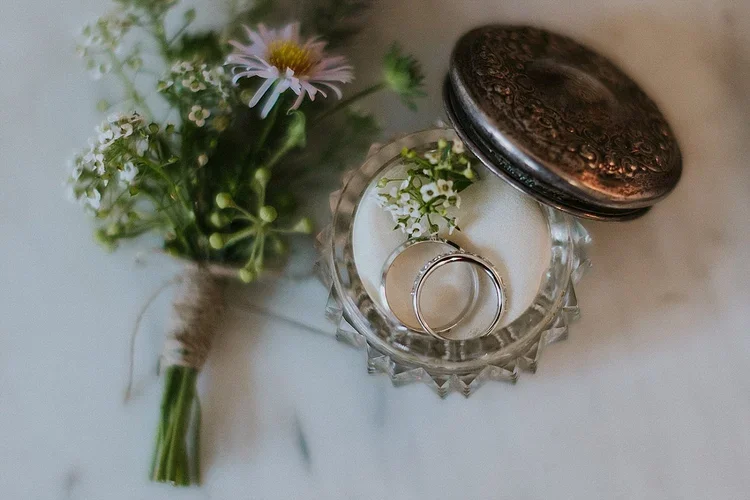
A truly elegant wedding boutonniere does not shout; it whispers. From medieval knights to modern groom style, discover the history, symbolism, and seasonal artistry behind the perfect buttonhole flower—and why less is always more on your wedding day.
For centuries, wedding floral design has focused heavily on grand statements. We marvel at the bridal bouquet, the cascading altar arrangements, and the lush table settings. Yet, there is a quiet, singular element that carries just as much history, romance, and visual weight: the groom's wedding boutonniere.
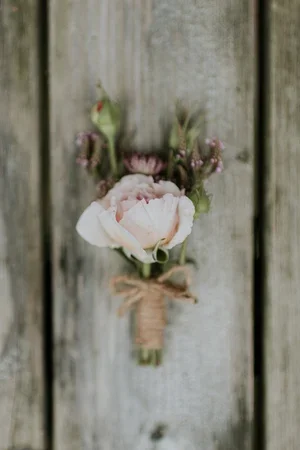
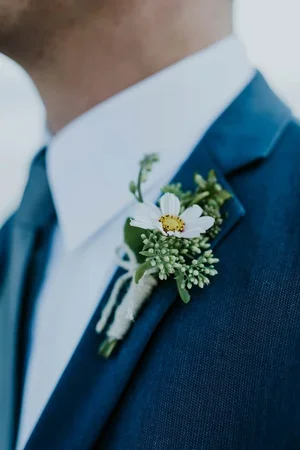
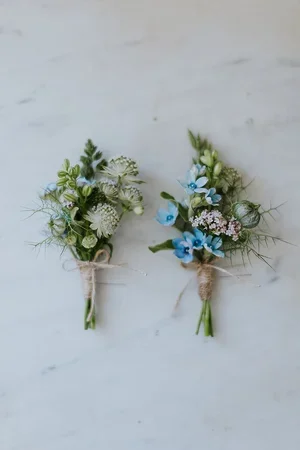
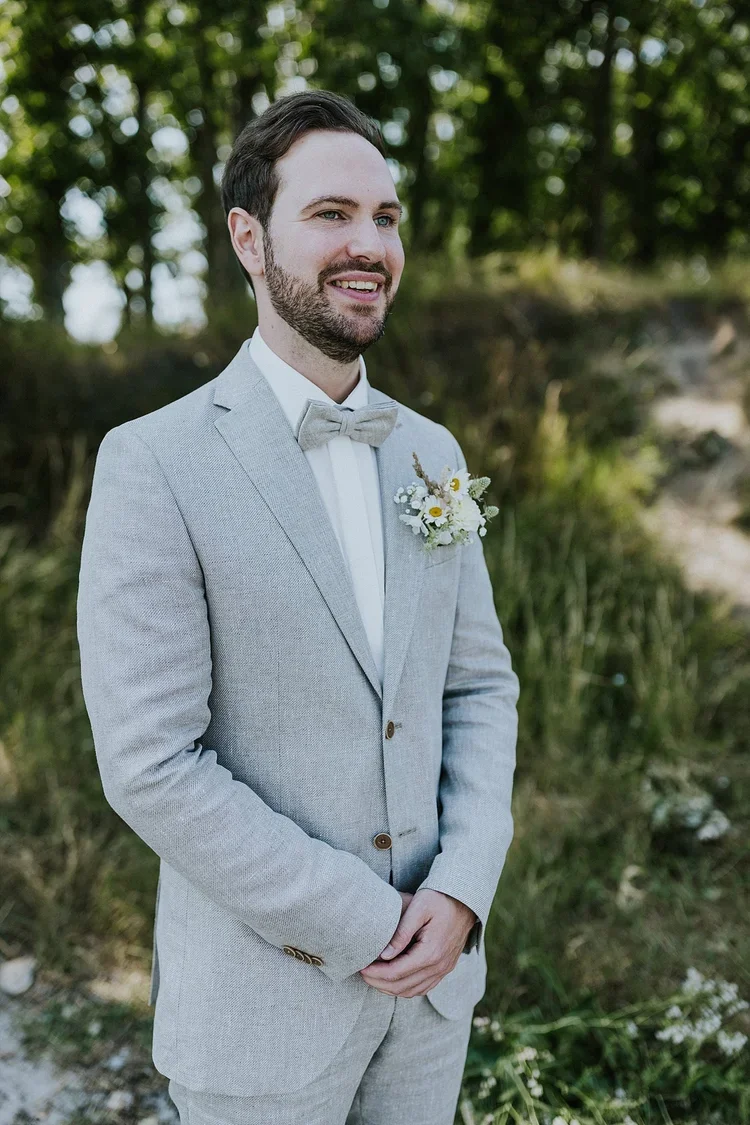
At Danish Island Weddings, we view buttonhole flowers not as an afterthought, but as a masterpiece in miniature. Louise has spent years perfecting the art of the wedding boutonniere, operating on a core philosophy: less is more. A truly elegant groom's boutonniere does not shout; it whispers. It is a refined, intentional accent that completes a groom's attire and anchors him to the overall wedding aesthetic.
A Brief History: Why the Boutonniere is as Vital as the Bridal Bouquet
The word boutonniere translates directly from French as "buttonhole." Historically, gentlemen wore flowers in their lapels daily, a tradition stemming from medieval times when knights wore their lady’s colors into battle to show allegiance.
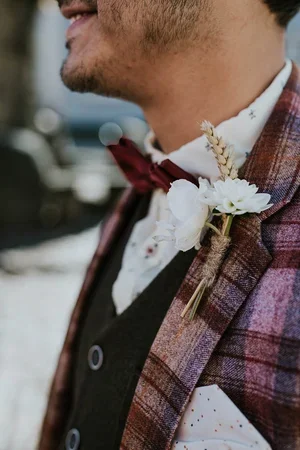
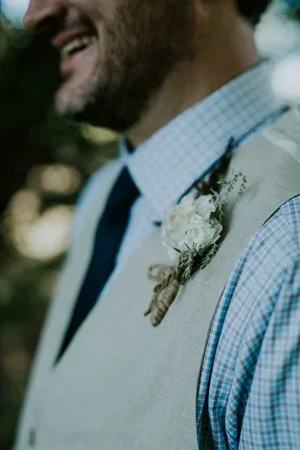
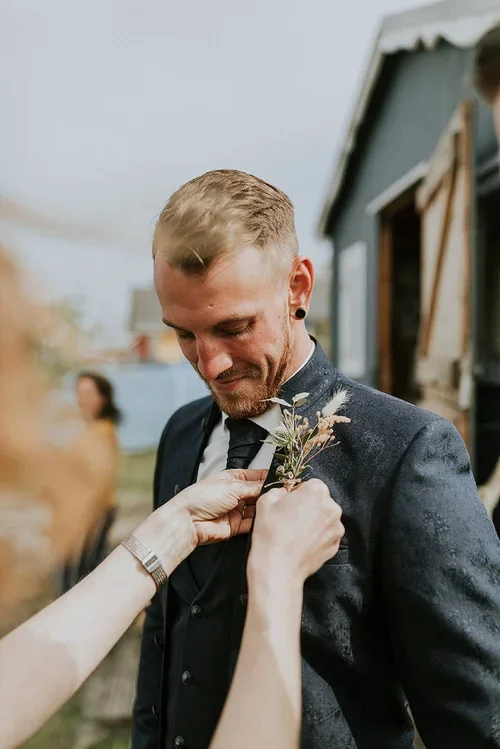
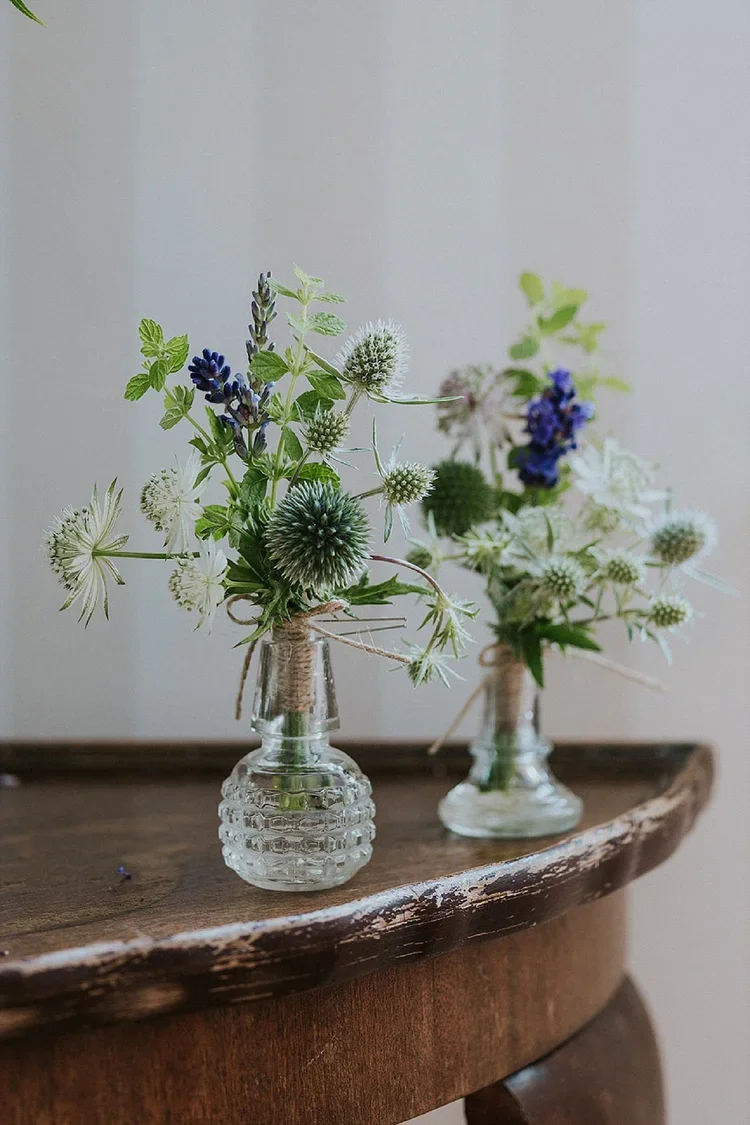
By the 19th century, the buttonhole flower became the ultimate symbol of the refined romantic. Culturally, it is just as significant as the bridal bouquet. While the bouquet represents growth, fertility, and the future, the groom's boutonniere represents a personal pledge. It is the visual thread that binds the couple together, mirroring the bridal flowers on a scale that respects the clean lines of tailoring.
Seasonal Wedding Flowers: Nature’s Rhythm on the Danish Islands
Louise’s approach to boutonniere design relies entirely on the natural rhythm of the seasons. Using seasonal wedding flowers ensures that the lapel arrangement feels alive, fresh, and deeply connected to our island landscape.
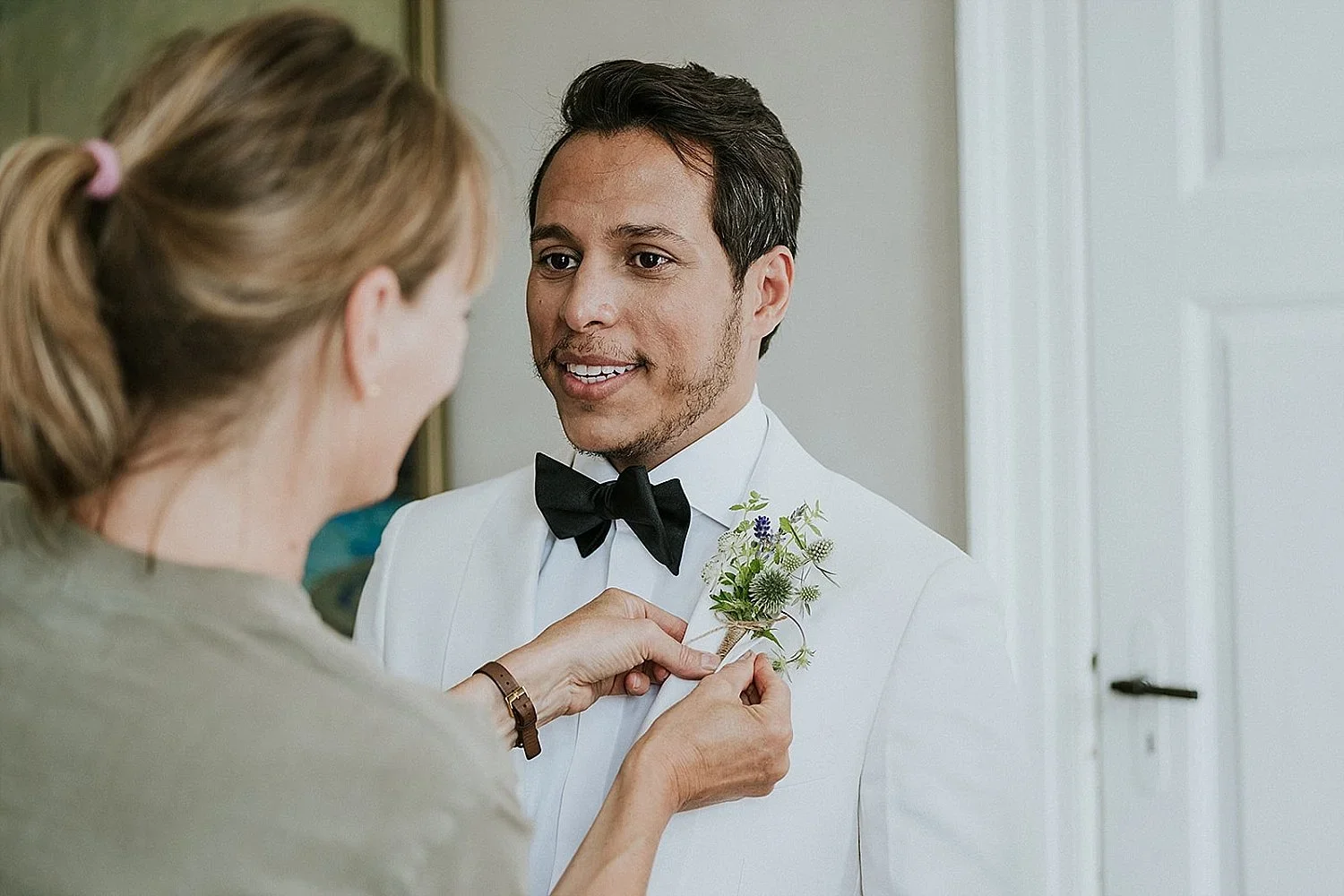
Spring Boutonnieres Bring a sense of crisp renewal. Louise often pairs a singular, pale lily of the valley with delicate sprigs of fresh rosemary or a single, structural hellebore.
Summer Boutonnieres Capture the height of abundance. Think a single, compact garden rosebud, accented with wild grasses or a touch of local lavender to catch the sea breeze.
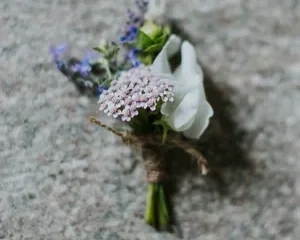
Autumn Boutonnieres Introduce rich, textured, and earthy tones. This season calls for small dahlia buds, dark berries, or a spray of autumn heather nestled against a changing leaf.
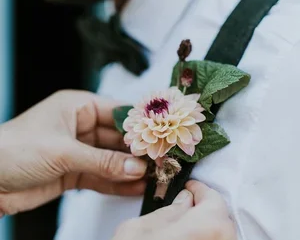
Winter Boutonnieres Focus on the minimalist and striking. A sprig of dark green pine, a solitary white ranunculus, or a textured seed head wrapped in understated twine.
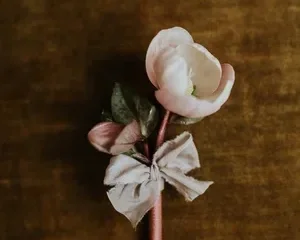
The Language of Flowers: Meaning and Symbolism
Flowers carry historic meanings that add a layer of silent storytelling to your wedding day. When selecting elements for our boutonnieres, we look to this classic symbolism to personalize the groom's style.
Rosemary is long associated with remembrance and fidelity. It adds a beautiful, aromatic scent every time the groom moves.
White Ranunculus symbolizes radiant charm and attraction. It is the perfect choice for a clean, modern wedding suit.
Myrtle is a traditional wedding herb representing love and fidelity, adding a timeless green texture to the lapel.
Lavender signifies devotion and calm, offering a soothing presence before walking down the aisle.
The Precision of Color Coordination in Groom Style
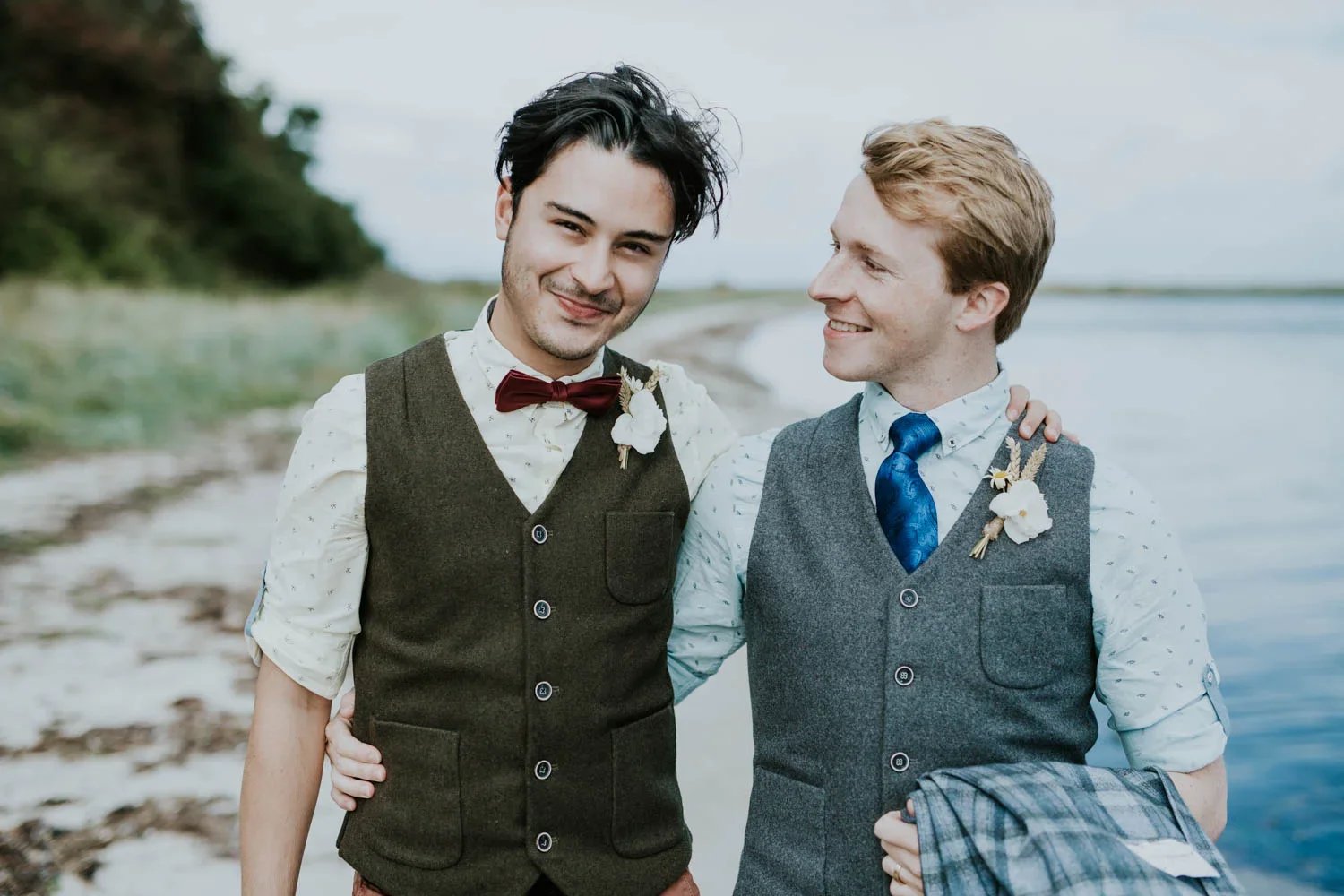
The secret to Louise’s perfected technique lies in precise color harmony. A boutonniere must never fight with the groom’s suit, nor should it simply replicate the bride’s bouquet in a smaller size. It requires careful calibration.
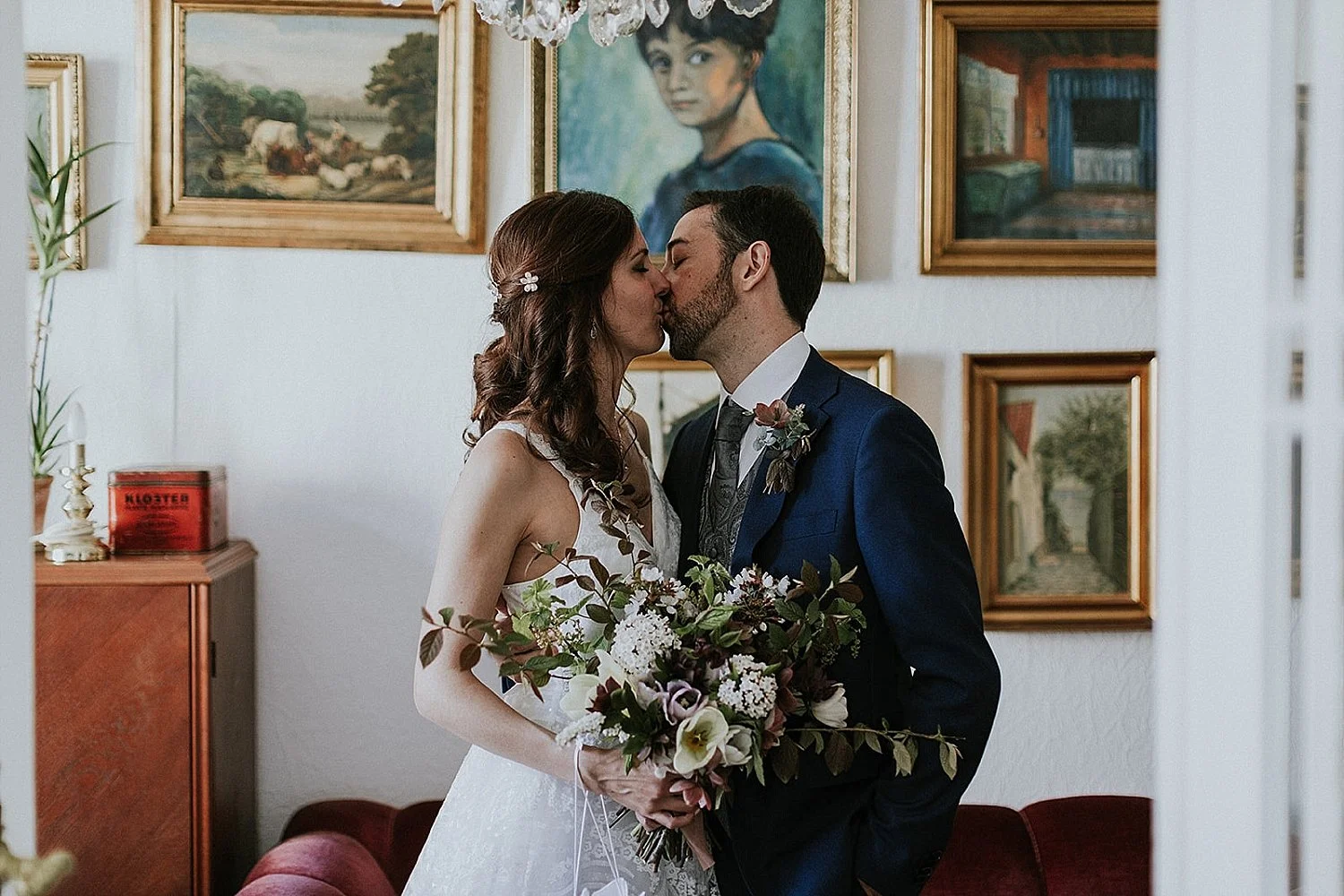
If the bridal bouquet features vibrant, sweeping tones, the wedding boutonniere pulls just one single, neutralizing accent color from that palette. Furthermore, the flower must complement the fabric of the suit. A dark navy tuxedo demands a crisp, high-contrast bloom, while an earthy tweed or linen summer suit pairs beautifully with muted tallows, greens, and dried textures.
A boutonniere is the final touch of poetry on a groom's lapel. Through Louise’s hands, it becomes a small, powerful testament to the art of simplicity.